 By admin
A comfortable, durable home depends on more than attractive rooms and a well-maintained yard. The systems inside your house and the conditions surrounding it work together. A leaking roof can damage insulation and reduce energy efficiency. Overgrown vegetation can block airflow, trap moisture against siding, or threaten a future addition. An enclosed outdoor space can also increase heating and cooling demands if it isn’t planned carefully.
Because these projects are connected, completing them in the wrong order may lead to duplicated work and unnecessary expenses. Installing new interior finishes before resolving moisture problems can result in damaged materials. Building an addition before evaluating mechanical capacity may leave the new space uncomfortable. Even routine exterior maintenance can interfere with completed landscaping or construction if it isn’t scheduled properly.
A coordinated property plan helps you address urgent concerns first while preparing for future improvements. Start with safety, water intrusion, and essential equipment. Then evaluate vegetation, outdoor structures, and preventive maintenance. When the entire plan cannot be completed at once, dividing it into logical phases can help you protect your budget without losing sight of your long-term goals.
Evaluate Comfort Problems Before Expanding Your Living Space

Before finishing a basement, replacing windows, converting a garage, or enclosing an outdoor area, evaluate how well your existing heating and cooling equipment serves the current house. Adding usable square footage may increase the system’s workload, and existing comfort problems rarely disappear after a renovation.
Begin by reviewing the age, condition, and repair history of your equipment. Compare recent utility bills with bills from the same season in previous years. A gradual increase in energy consumption can indicate declining performance, but it may also point to damaged ductwork, air leaks, poor insulation, or changing household habits.
Walk through the home while the system is operating and note:
- Rooms that are consistently warmer or colder
- Weak airflow from certain vents
- Unusually humid or dry areas
- Frequent cycling on and off
- Rattling, banging, buzzing, or grinding sounds
- Musty, burning, or electrical odors
- Water collecting near indoor equipment
- Thermostat settings that do not match room conditions
Professional ac repair services may be needed when the system blows warm air, struggles to maintain the selected temperature, produces weak airflow, or runs almost continuously. A complete inspection should go beyond checking whether the outdoor unit turns on. The technician may need to examine the coils, electrical components, refrigerant circuit, condensate drain, blower, thermostat, filters, and accessible ducts.
Heating problems deserve similar attention. Schedule heating repair services when you notice delayed ignition, unusual smells, cold spots, loud operation, short cycling, or unexplained increases in fuel use. Certain symptoms may also indicate a safety concern, particularly when combustion equipment is involved. Carbon monoxide alarms should be installed and maintained according to manufacturer instructions and applicable local requirements.
This distinction can help you avoid paying for repeated repairs that merely postpone an inevitable replacement. At the same time, it prevents you from replacing equipment when a smaller issue, such as a failing component or blocked drain, is responsible for the problem.
Do not assume the equipment is always the cause of uneven temperatures. Poor insulation, disconnected ducts, inadequate return-air pathways, air leakage, and improperly balanced vents can produce similar symptoms. Addressing these conditions may improve comfort without requiring a larger system.
Resolve significant performance issues before expanding the conditioned area. This gives you a clearer understanding of the home’s needs and reduces the risk that a new room will be difficult or expensive to keep comfortable.
Compare Proposals Based on Whole-Home Performance
Heating and cooling equipment is only one part of the comfort system. Insulation, windows, ventilation, air sealing, duct design, humidity control, and building orientation all influence how easily the home maintains a consistent temperature.
When comparing HVAC companies, ask for more than a replacement estimate based on the size of the existing unit. The contractor should evaluate the property’s layout and current condition before recommending equipment. Changes made since the original installation, including new windows, additions, insulation, or air-sealing work, may have altered the home’s requirements.
Correct sizing is important. An oversized air conditioner may cool the house quickly but shut off before removing enough humidity. Frequent cycling can create temperature fluctuations and place unnecessary wear on components. Undersized equipment may run for long periods while still failing to maintain comfort during extreme weather.
Qualified hvac repair contractors can also help determine whether full replacement is actually necessary. Depending on the system’s condition, targeted repairs, duct sealing, additional return pathways, zoning controls, updated thermostats, or airflow adjustments may provide better value.
Compare written proposals carefully. Each estimate should identify:
- Equipment model and efficiency rating
- Labor and material costs
- Required permits and inspections
- Electrical or gas-line modifications
- Ductwork included in the project
- Warranty terms
- Maintenance requirements
- Disposal of old equipment
- Expected project schedule
- Items that could create additional charges
Ask what calculations support the proposed capacity. A contractor should be able to explain why a specific system is appropriate rather than simply recommending a unit similar to what is already there.
Future plans should also be part of the discussion. Tell the contractor about any rooms you expect to finish or add. An enclosed porch, expanded kitchen, home office, or converted attic may affect equipment sizing, duct routing, and electrical capacity. It is usually less expensive to account for these changes during a planned upgrade than to modify a newly installed system later.
Mechanical, electrical, insulation, and remodeling work should be coordinated whenever possible. For example, open walls create an opportunity to improve ductwork or air sealing before drywall is installed. A planned electrical upgrade may also support future heating and cooling equipment.
The strongest proposal is not necessarily the one with the largest system or lowest price. It is the one that explains how the recommended work will improve comfort, reliability, humidity control, and efficiency across the entire home.
Stop Water Intrusion Before Building an Addition
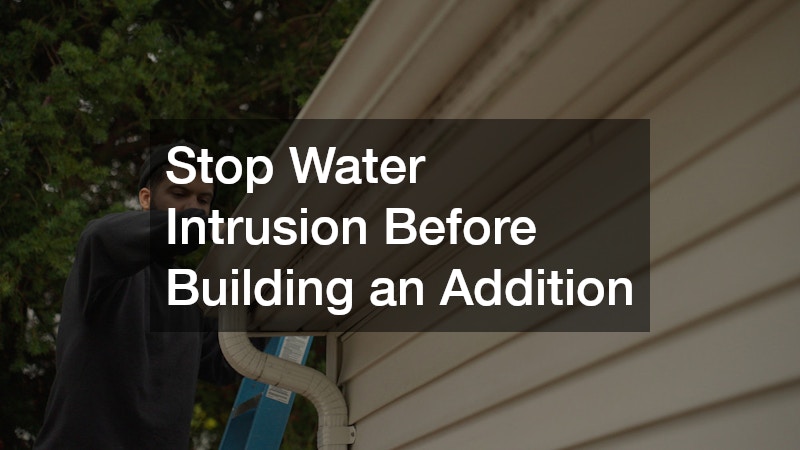
Exterior living improvements can add valuable space, but they should not be built against a structure with unresolved leaks or drainage problems. Water entering through shingles, flashing, siding, or roof penetrations can damage framing and finishes long before visible stains appear indoors.
Signs that roof repairs may be needed include:
- Missing, curled, cracked, or lifted shingles
- Granules collecting in gutters
- Ceiling or wall stains
- Damp or compressed attic insulation
- Rust near flashing or fasteners
- Daylight visible through the roof deck
- Sagging sections
- Moisture near chimneys, vents, or skylights
- Peeling paint around soffits and fascia
Inspect gutters and downspouts as part of the evaluation. Water that overflows or drains too close to the foundation may affect basements, crawl spaces, siding, walkways, and future footings. Correcting the visible leak without addressing runoff may leave the underlying problem unresolved.
Complete necessary structural and moisture work before planning 3 and 4 season porches. These spaces should be treated as extensions of the home rather than freestanding features attached as an afterthought. The connection between the existing wall and the new roof is especially important because improper flashing can direct water into concealed framing.
An enclosed space can also reduce natural light reaching the adjoining room. Before finalizing the design, consider window placement, roof height, and how the new structure may shade existing doors or windows.
The project may affect gutters, downspouts, siding, exterior lights, utility lines, and mechanical equipment. Homeowners should also investigate setbacks, permits, structural requirements, and neighborhood restrictions before construction begins.
Include a contingency amount in the budget for conditions that may not be obvious during initial planning. Potential added costs include:
- Rotted sheathing or framing
- Insufficient footings
- Electrical panel modifications
- Siding replacement
- Gutter relocation
- Interior trim transitions
- Drainage corrections
- Utility relocation
Ask the roofing and remodeling professionals to review the plans together when their work overlaps. Clear responsibility for flashing, water management, and exterior finishes can prevent gaps between contracts.
A new living area will provide greater long-term value when it is built against a dry, structurally sound home. Correcting leaks first protects both the original building and the new investment.
Manage Hazardous Vegetation Before Work Begins
Trees can improve shade, privacy, curb appeal, and soil stability, but they can also create significant risks around a construction site. Evaluate mature trees before scheduling roofing work, an addition, exterior cleaning, fencing, paving, or major landscaping.
Document questionable conditions with photographs and inspect the yard after major storms. Changes in the canopy, trunk, or surrounding soil may indicate that a tree requires professional evaluation.
A tree removal company may be necessary when a tree is dead, severely diseased, structurally unstable, or located within the footprint of a planned project. Request a detailed estimate rather than relying on a single total price.
The proposal should explain whether it includes:
- Cutting and controlled lowering of branches
- Trunk removal
- Stump grinding
- Hauling logs and debris
- Cleanup of wood chips
- Protection of lawns and landscaping
- Coordination around utility lines
- Access for trucks and lifting equipment
Verify insurance and any licensing required in your area. Tree work can involve heavy materials, elevated cutting, and equipment operating close to buildings. Proper coverage is important when work occurs near roofs, vehicles, fences, neighboring properties, or utility lines.
Removal is not the only option. Tree service companies may recommend selective pruning, deadwood removal, cabling, soil improvements, or other measures that preserve a healthy tree while reducing risk. Avoid automatically removing mature vegetation simply because it sheds leaves or complicates a design. Healthy trees can reduce summer heat, limit erosion, provide wind protection, and make outdoor spaces more pleasant.
Complete major tree work before installing delicate or expensive exterior improvements. Falling debris and heavy equipment can damage new shingles, porches, fences, driveways, patios, lawns, and planting beds. Contractors may also need a clear access route for cranes, bucket trucks, chippers, or hauling vehicles.
Coordinate access before work begins. Mark irrigation lines, septic components, underground utilities, and areas that cannot support heavy equipment. Discuss how ruts, compacted soil, or damaged grass will be handled.
Early vegetation planning improves job-site safety and reduces the likelihood that newly completed work will have to be repaired because an existing hazard was addressed too late.
Establish a Seasonal Exterior Maintenance Routine

Ongoing maintenance protects the improvements you have already completed and helps you notice minor concerns before they become expensive repairs. A seasonal routine should include the roofline, siding, porches, walkways, windows, drainage features, and areas where insects or animals could enter.
Pressure washing may help maintain certain exterior surfaces, but more force is not always better. Excessive pressure can scar wood, force water behind siding, break window seals, loosen mortar, strip paint, and damage roofing materials. Match the nozzle, pressure, and cleaning product to the surface.
Inspect the machine before each use. Check hoses, fittings, pumps, nozzles, cords, fuel components, and safety controls. Do not operate equipment with leaks, damaged wiring, unstable pressure, or malfunctioning controls.
Local pressure washer repairs may make sense when an otherwise dependable machine has a failed pump, worn seal, damaged hose, clogged component, or control problem. Compare the repair estimate with the age, condition, and replacement cost of the equipment. Always follow manufacturer guidance and avoid modifying safety features.
Exterior cleaning also provides an opportunity to look for conditions that attract unwanted insects or wildlife. Moisture, damaged vents, gaps in trim, overgrown plants, and accessible food sources can turn small openings into recurring problems.
Consider scheduling pest control when you notice:
- Droppings or nesting material
- Scratching inside walls or ceilings
- Recurring insects in the same area
- Chewed wiring or insulation
- Wood damage
- Entry holes near the roofline
- Tracks or disturbed soil
- Unusual odors in enclosed spaces
Effective treatment should address more than the visible activity. The source of the infestation, access points, food, shelter, and moisture conditions should also be identified. Otherwise, the problem may return after temporary treatment.
Sequence Projects to Protect Every Investment

Interior comfort and exterior durability should be treated as parts of one property plan. Begin with immediate safety concerns, active leaks, and unreliable essential equipment. Then address hazardous vegetation, structural work, and improvements that depend on the earlier projects being completed correctly.
Rank each project by urgency, the cost of delaying it, its effect on daily life, and the likelihood that it will interfere with future work. Written inspections and detailed estimates can help you separate genuine priorities from optional upgrades.
Create a master schedule when several contractors are involved. Make sure each professional understands the larger plan, especially when electrical, structural, drainage, or finishing work overlaps. A contingency fund can also help cover concealed deterioration, permitting changes, and other conditions discovered after work begins.
The most effective improvement plan is not always the fastest one. A thoughtful sequence can reduce duplicated labor, protect completed projects, and allow you to spread costs across manageable phases. By treating the house and surrounding property as a connected system, you can create a home that remains comfortable, durable, and enjoyable throughout the year.